


Cartoon Avatars
Turn a clear portrait into profile art for social accounts, communities, games, or creator branding.
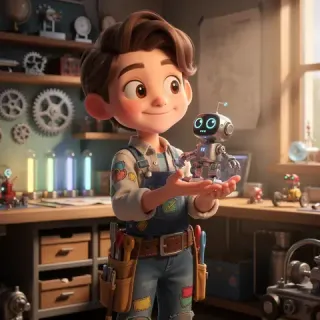
Start with a visual preset instead of writing style instructions from scratch. Each style changes the linework, color, texture, and mood while leaving you in control of the subject and scene.
An AI cartoon generator turns a photo, reference image, or written description into new cartoon artwork. It interprets the subject and scene, then renders the result in the visual direction you choose.
The model reads recognizable details such as glasses, expressions, clothing, pose, and the relationship between the subject and background.
Lighting, shapes, color, and material are reconstructed for the selected style instead of placing a fixed effect over the original pixels.
Use a photo when likeness matters, or start with text when you want an original character, scene, pet portrait, avatar, or content visual.
Use a recognizable photo when likeness matters, or begin with a prompt when the idea matters more than the source.
Turn a clear portrait into profile art for social accounts, communities, games, or creator branding.
Prompt
An original young desert courier hero wearing a weathered turquoise scarf, lightweight utility armor, fingerless gloves, and a compact mechanical compass
Explore clothing, expressions, poses, and settings before committing to a character direction.
Preserve familiar markings and personality in a playful portrait made for sharing or gifting.
Rework a person, couple, or family photo into a more expressive illustrated keepsake.
Reimagine travel photos and locations with a different season, mood, weather, or color palette.
Prompt
A skateboarder wearing a bright helmet performing a stylish aerial trick above a purpose-built rooftop skate park at dusk
Create thumbnails, blog art, channel graphics, and scenes that can later become short videos.
Turn a photo into anime or cartoon artwork, or create an original character and scene from a written idea. Choose from multiple styles, keep results in My Creations, and generate several variations when you want options instead of a single result.
Upload a portrait, pet, product, or scene, choose a style, and generate a new cartoon version rather than applying a fixed overlay. Add plain-language directions to keep recognizable details such as glasses, expression, hairstyle, clothing, or composition, or to change the pose, background, lighting, and materials.
Describe a character or scene when you do not have a source image. Specify the subject, appearance, pose, setting, mood, props, camera angle, and style to create original characters, mascots, story scenes, thumbnails, or campaign artwork.
Keep generated images in My Creations so you can review and download past results in one place. Reopen an image as a reference, save a result as a reusable character, continue with another variation, or use a still image to start an animation.
Subscribers can create up to four images from the same prompt, style, aspect ratio, and references in one run. Compare different expressions, compositions, or details, then keep the strongest result without rebuilding the setup for every attempt.
Move from a source or rough idea to a reusable cartoon image in four focused steps.
Upload a clear reference, write a prompt, or combine both when you want continuity and creative changes.
Choose a style, aspect ratio, and output quantity. Add the pose, setting, mood, or details that matter.
Create the first result, then adjust the source, prompt, or style when you want another interpretation.
Download without a watermark, keep the image in My Creations, reuse a character, or animate the result.
The useful difference is not one effect. It is how the model understands the input and how the result fits into the next creative step.
The model understands details such as glasses, a smile, or a red sweater. For 3D animation or Ghibli-inspired artwork, it rebuilds lighting, shapes, and materials instead of placing a fixed effect over the photo.
Create an account to receive 5 credits. Daily check-in adds 1 more credit, which can be used for an image generation. Generated image results do not carry a watermark.
Move between anime, comics, illustration, handcrafted, and dimensional styles without purchasing separate style packs.
Use public or self-made characters, keep useful results in My Creations, generate variations in batches, and animate a selected cartoon image.
Different methods solve different problems. AI is useful for fast exploration, filters are useful for simple effects, and manual illustration remains stronger when every line must be controlled.
| Comparison | AI Cartoon Generator | Photo filters | Manual illustration |
|---|---|---|---|
| Starting point | Photo, reference image, saved character, or text | Existing photo | Photo, sketch, or art brief |
| Result | A newly rendered interpretation | Modified original pixels | Artwork constructed by an illustrator |
| New scenes | Can invent new characters and scenes | Usually preserves the original scene | Can create any planned scene |
| Creative control | Prompt, style, references, and retries | A small set of effect controls | Precise control over individual details |
| Typical time | About 30–60 seconds | A few seconds | Hours or days |
| Batch exploration | Up to four results per run for subscribers | Usually one effect at a time | Usually created individually |
| Best suited to | Fast concepts and repeatable content | Quick novelty effects | Final art requiring exact control |
AI output can vary between runs. Manual illustration remains the better choice when exact line placement, editable vector paths, or strict visual consistency is required.
Straight answers about how generation works, what produces better results, usage rights, timing, and account limits.
It is a tool that uses a photo, reference image, saved character, or written prompt to render new cartoon artwork. It can follow an existing subject or create an original character and scene from text.
Bring a photo, a saved character, or a rough idea. Choose a style and build from the first result.
Practical tips for better cartoons from photos, prompts, and style choices.


